


Negative reviews are inevitable. No matter how good your product is or how hard your team works, you will eventually get a 1-star rating. The question isn’t whether it happens — it’s what you do when it does.
94% of consumers are less likely to engage with a business after seeing negative feedback — and shoppers are 514% more likely to focus on negative reviews than positive ones. Your worst reviews get the most attention. But how you respond to them often matters more than the review itself.
What Is a Negative Review?
A negative review is any customer feedback — typically 1 to 3 stars — that expresses dissatisfaction with a product, service, or experience. They show up everywhere: your Shopify storefront, Google Business profile, Facebook page, Trustpilot, or wherever customers talk about your brand.
Negative reviews generally fall into three types:
- Real issues — something genuinely went wrong on your end: a defective product, a late delivery, an unhelpful support interaction. These deserve a sincere apology and a real fix.
- Mismatched expectations — the product wasn’t what the customer imagined, often due to unclear descriptions, photos, or sizing guides. “The color looked different in the photos” or “I didn’t realize this was a digital download” are common examples. Usually a sign to improve your product page.
- Bad-faith reviews — fake, malicious, or clearly irrelevant feedback. These are rare, but most platforms have a process to flag and request removal if they violate policies.
Knowing which type you’re dealing with shapes how you respond.

Why Negative Reviews Aren’t All Bad
It’s natural to feel frustrated when you see a low-star review. But negative feedback, when handled right, can genuinely work in your favor.
- They build trust. A perfect 5-star rating can feel too good to be true — and shoppers know it. 76% of consumers are more likely to trust reviews when the ratings are mixed. A few negative reviews, especially with thoughtful responses, make everything else look more credible.
- They give you actionable data. Negative reviews are often the most honest feedback you’ll get. Patterns in complaints — sizing issues, confusing instructions, slow response times — tell you exactly where to improve.
- They save customer relationships. 50–70% of customers who complain will do business with you again if the issue is resolved well. Resolve it quickly, and that number rises to 95%. A well-handled complaint can turn a one-time buyer into a loyal one.
- They filter the right buyers in. A review that says “runs small, size up” or “strong scent, not for everyone” helps shoppers make better decisions — which means fewer returns and more satisfied customers.
What NOT to Do When You Get a Negative Review
Before getting into tactics, here are the mistakes to avoid:
- Don’t ignore it. Silence signals indifference. Even a brief, professional acknowledgment goes a long way.
- Don’t respond defensively. Even if the customer is wrong, arguing publicly damages your brand more than the original review.
- Don’t resolve compensation publicly. Whether it’s a refund, replacement, or discount — handle it in private. Doing it in public invites others to leave bad reviews just to get something.
- Don’t copy-paste generic responses. “We’re sorry to hear this, please contact support” feels hollow. Personalize your reply to the specific issue.
- Don’t try to remove legitimate reviews. If a review doesn’t violate platform policies, leave it. Respond to it instead.
How to Respond to Negative Reviews
Responding Publicly
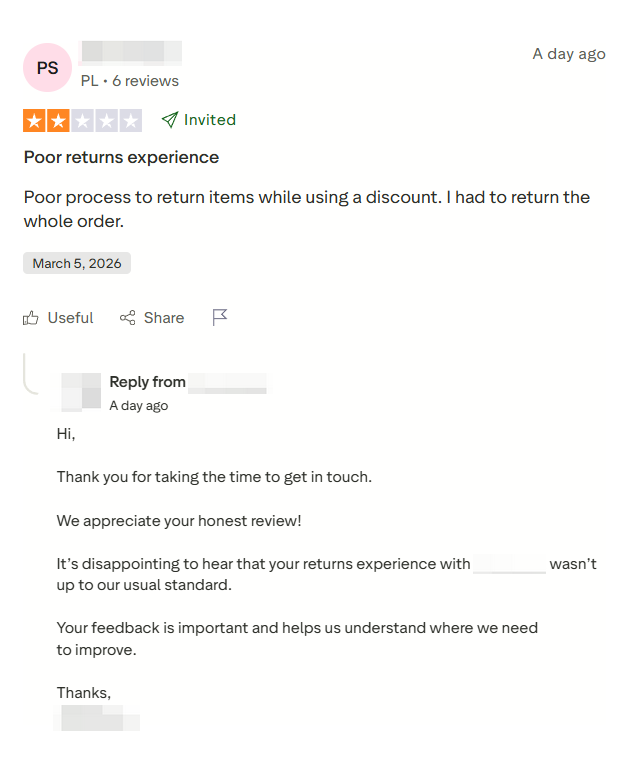
Public replies are visible to every potential customer who reads the review. They’re not just for the reviewer — they’re a signal to everyone else about how you treat customers.
The formula:
- Thank the customer for their feedback
- Acknowledge the specific issue (don’t be vague)
- Apologize if appropriate — even if the issue wasn’t entirely your fault
- Explain what you’re doing or have done about it
- Invite them to follow up privately to resolve
Example — product defect:
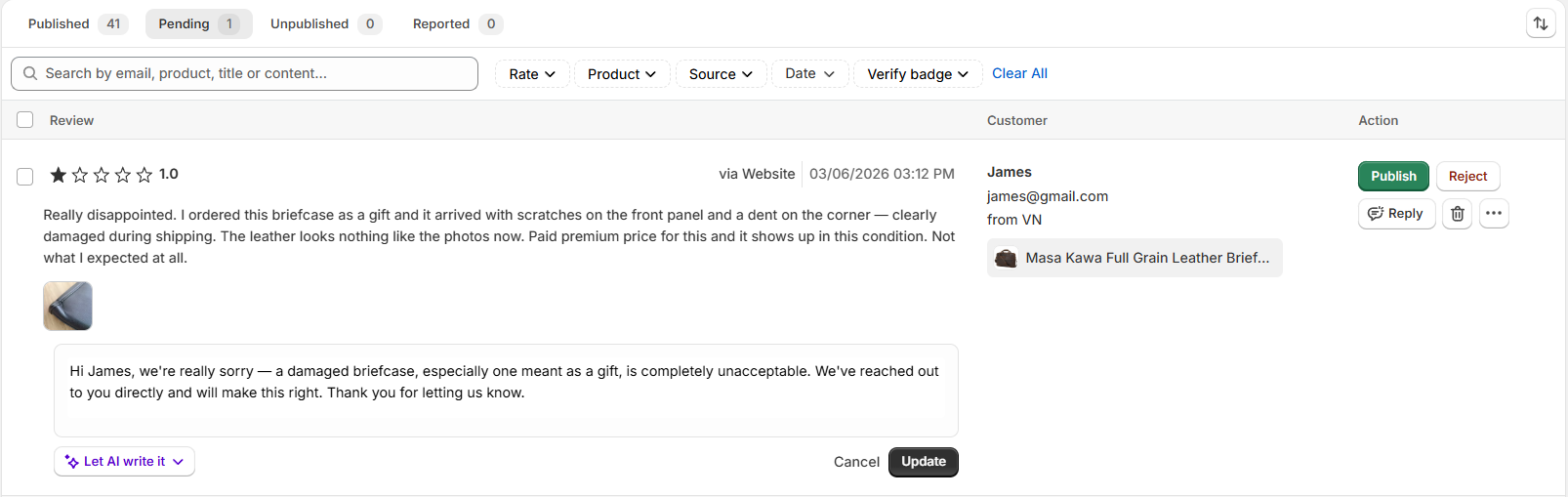
“Hi [Name], we’re really sorry about this — it’s not the experience we want for you. We’ve reached out to you directly to make it right.”
Example — shipping delay:
“Hi [Name], we’re sorry for the wait — we completely understand the frustration. We’ve sent you a message directly and will take care of you.”
Example — user error:
“Hi [Name], thank you for the feedback. We’re sorry the setup wasn’t clear. We’ve reached out to you directly — our team will walk you through it and make sure everything works as expected.”
Responding Privately
Some situations are better handled offline — complex refund negotiations, personal details, or cases where the customer is clearly very upset. A private message lets you have a real conversation without an audience.
Even if you respond publicly first, follow up privately to resolve the specifics. Use the customer’s email address to reach out directly and keep the tone warm and solution-focused.
Managing Negative Reviews with TrustShop
TrustShop has built-in tools to help you catch and respond to negative reviews quickly.
Set Up Review Notifications
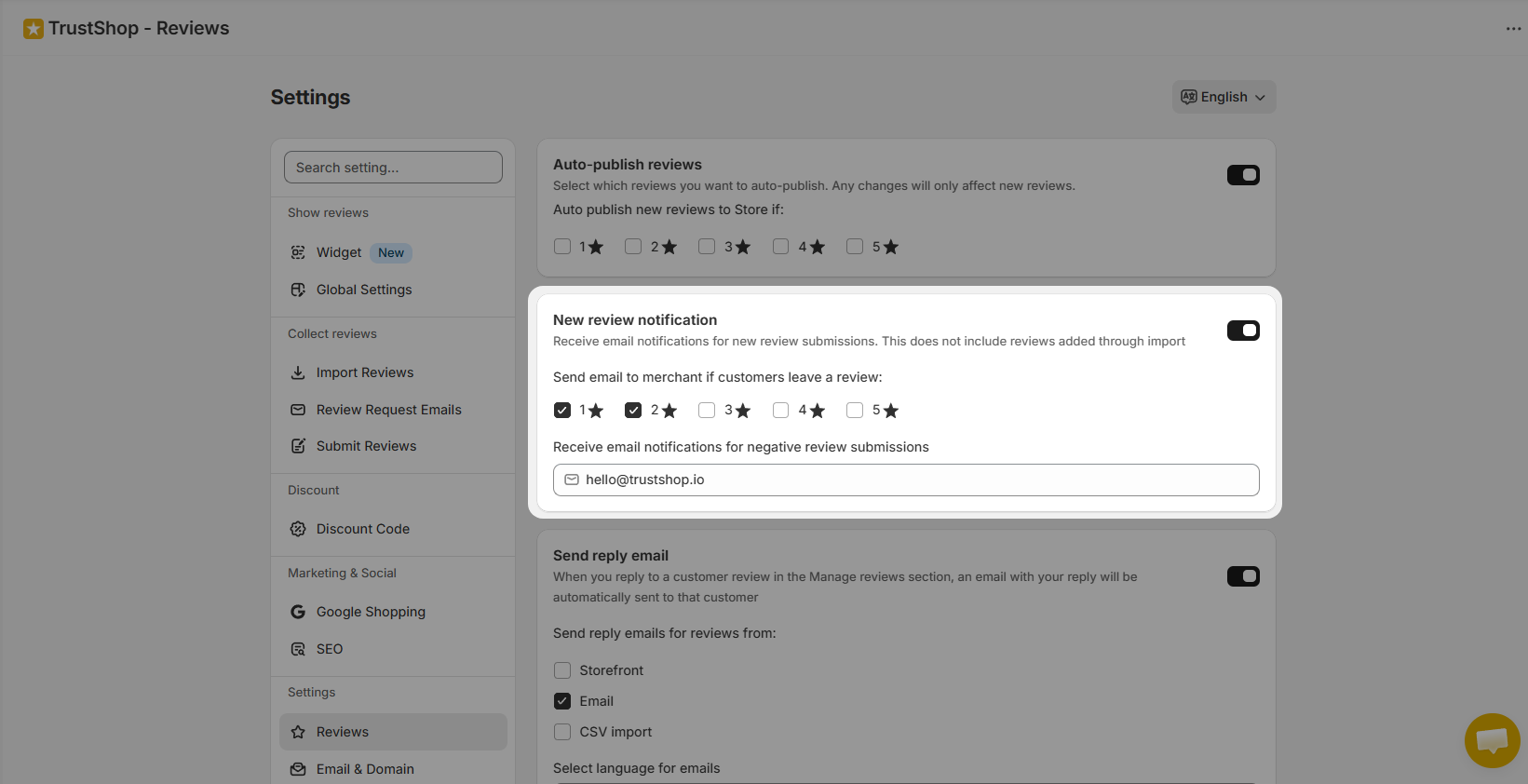
By the time you notice a negative review, it may have already been sitting there for days. Go to Settings → Reviews → New review notifications, pick the star ratings you want alerts for (e.g. 1 and 2 stars), and enter your email. You’ll be notified the moment a review comes in.
Reply Publicly on Your Storefront
TrustShop lets you reply to reviews directly, with your response visible to shoppers on your storefront. This is your chance to show potential customers how you handle issues — professionally and promptly.To reply: go to Manage Reviews, select the review, and tap Reply.
Follow Up Privately
For situations that need more than a public response, use the customer’s email address (available in the review details) to send a private follow-up. Address their concern directly, offer a resolution, and keep the conversation off the public record until it’s resolved.
Final Thoughts
Negative reviews are not the problem — ignoring them is. Respond promptly, be straightforward, and use the feedback to improve. That’s what turns a bad review into a reason for customers to trust you more.
Turn Reviews Into Revenue
Collect, manage, and display high-converting reviews — built for Shopify merchants.